
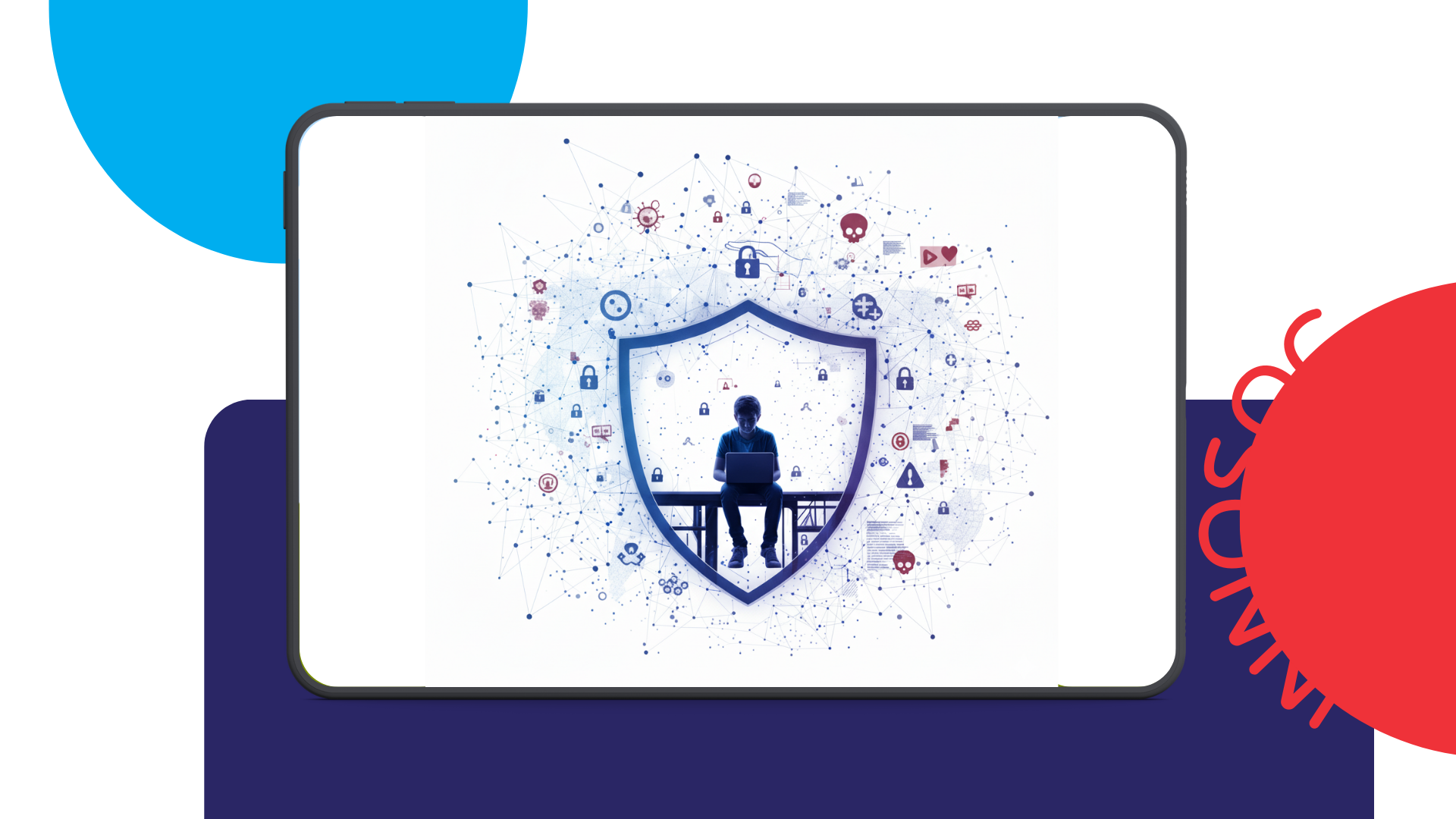
Today’s generation is growing up in the so-called information and technology age, in which various technologies are part of everyday life and being online is the normal status quo. These tools give them easy access to the digital world, where they communicate, look for information, learn and have fun.
The online space also carries potential threats that lie in wait for young people. To defend themselves effectively against these risks, they should know what they are exposed to and learn how to protect themselves against these threats. Read about the most common pitfalls and how to prevent and protect against them.
Threats and risks of the digital world for young people
Potential threats have long stopped lurking for young people only outside your front door. They are often much closer and more cunning than you can imagine. The digital world is relatively new territory even for many adults. If you want to protect young people effectively against digital threats, one way is to keep educating yourself about risks and safety online. Prevention is the key to success in this area too.
Technological development is moving at a dynamic pace, which is why it is sometimes very hard to recognise the risks.
Here is an overview of the most common threats in the digital world that endanger not only young people.
Searching (surfing) the internet
The internet is a major source of a huge amount of varied information that can have far-reaching negative effects on young people. Young people often cannot yet reliably distinguish offensive, toxic and dangerous content, and they often do not know how to search for information safely online and where it is better not to click.
Adult content
Another big threat, not only for young people, is the easy and fast availability of adult content online. This content is often not only inappropriate for them but in many respects genuinely dangerous.
Communication on social networks
Even many parents and other adults still lack sufficient awareness of the threats present online and routinely publish their sensitive data, information, photos of themselves and their children and so on without much thought. It is very important that you learn to protect your privacy effectively and teach your children to do the same.
Communicating intimate matters and sending intimate content
A separate chapter of communication is sending messages, photos or other intimate content. If such content is misused in any way, young people often bear the consequences for the rest of their lives. Such content and information can easily be misused in many ways for blackmail and other illegal and criminal activity.
Online fraud
Young people shop online. It is convenient and often cheaper. With greater demand, however, comes a growing appetite among fraudsters, who use increasingly sophisticated methods in their online scams. In these scams, users can lose personal data that can be misused, money, privacy and more.
Other threats include the risk that young people may fall prey to games and gambling, risks related to discrimination, various types of bullying, blackmail and abuse, as well as encountering various forms of hate speech.
Another significant risk is developing an addiction to technology, social media and online relationships, which deepen the fear of missing out (FOMO) and the fear of better options (FOBO) and lead to psychological difficulties or social isolation.
Safety recommendations and protecting young people
The digital world is part of our everyday lives. You should learn to move around in it safely and pass these principles on to young people. It is important to understand that such danger exists and is hard to recognise. Learn to recognise it and to apply protective measures effectively.
- Responsibility for the data and content you publish on the internet, social networks and other communication websites and platforms. Do not share details such as your home address and phone numbers publicly.
- The same applies to data and information about where you regularly go, what you do there, with whom, and so on.
- Sharing photos is very popular. However, this activity carries a high risk of potential misuse in various ways. If pictures and photos show young people’s exposed bodies or provocative poses, the threat is even greater. Nude photos of small children should definitely remain part of family albums. This is not content you should show to anyone else.
- Interacting with people you don’t know. The internet gives people anonymity, and you can never be completely sure who you are communicating with. Not communicating with strangers and not following them is perhaps an even more essential form of prevention and protection online than in the physical world.
A safe world starts at home
Be a role model and talk openly with young people about the threats of the digital world. Create a home for them in which they won’t have to look for relationships, information and entertainment elsewhere. When young people are raised in a safe, loving, inspiring and stimulating environment, where they can express themselves authentically and are supported in doing so, it is the basic prevention against many problems and threats. Build healthy boundaries in children.
This article is an output of the project “Multitenant Cybersecurity Operations Center Delivered as an Open Cloud Service with Machine Learning Elements.” Project code – 09I05-03-V02-00010.